A Clearer Look at Decompression
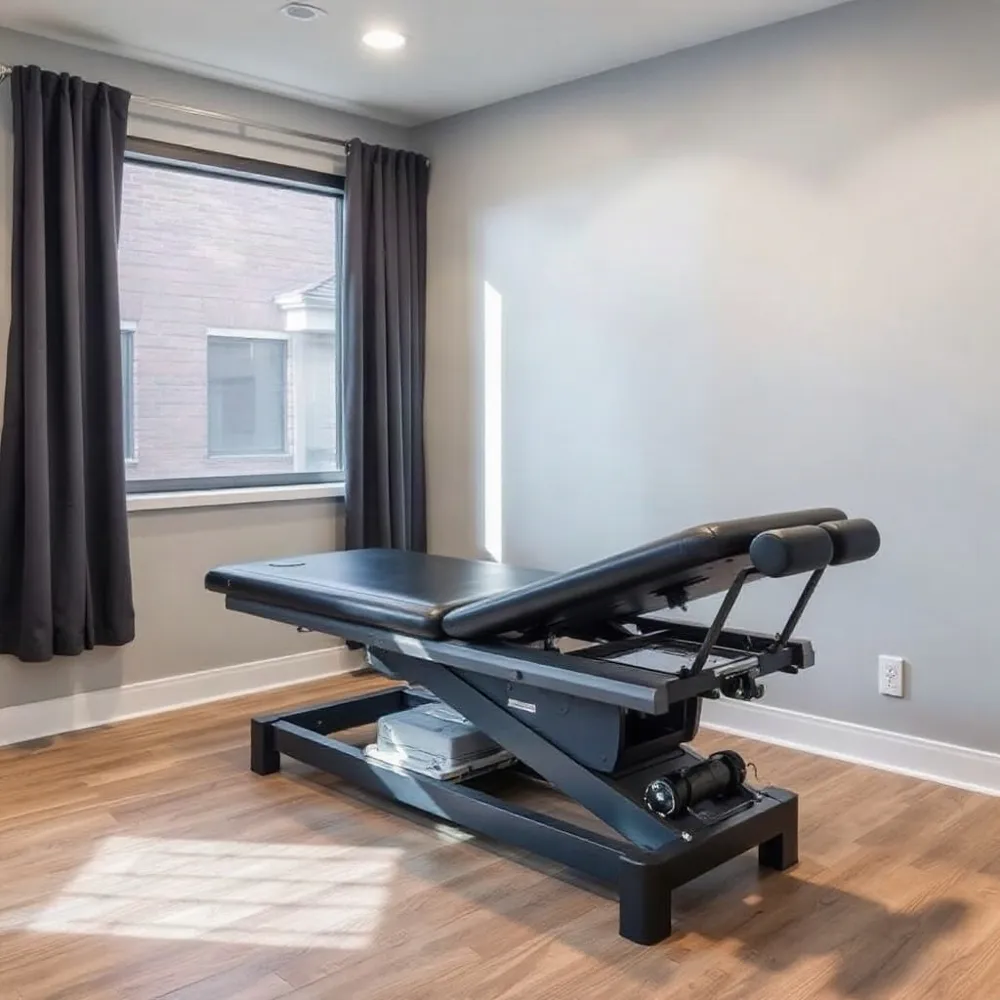
If back pain or symptoms traveling into a leg are disrupting daily life, you may come across non-surgical spinal decompression as one possible treatment. It uses a motorized table to apply controlled traction. The proposed aim is to ease pressure on spinal discs and nearby nerves, though that mechanism does not guarantee relief.
Research offers some encouraging findings, but the evidence is not conclusive. A 2022 randomized trial found short-term improvements when decompression was added to physical therapy for adults with lumbar radiculopathy, while its small sample and lack of longer follow-up limit what can be concluded for other patients or settings (trial report). A 2007 review also described important weaknesses in the earlier studies it assessed (review of decompression research).
For Raleigh residents considering care at Osborne Chiropractic Clinic, an individual assessment matters. The clinic offers the DRX9000 non-surgical disc decompression system, but studies conducted elsewhere do not establish its outcomes for this practice. A clinician can discuss your symptoms, health history, and suitable options before recommending a plan.
How Motorized Decompression Works
 If you're a Raleigh resident dealing with back or neck pain, you might be wondering about non-surgical options. One approach that some people find helpful is motorized spinal decompression. Here's how it works.
While you lie comfortably on a treatment table, a system gently applies and releases a controlled pulling force to a specific area of your spine. This is different from spinal decompression surgery, which involves an operation to relieve pressure on nerves.
The idea behind this treatment is that by changing the force and position of the spine, pressure within a disc may be reduced. This could help a disc that is bulging or herniated retract and allow water and nutrients to flow into the disc. It's important to note that these are proposed effects, not guaranteed results. WebMD's overview describes the approach as a type of motorized traction and notes that more research is needed.
Unlike inversion tables that rely on gravity, or basic traction that uses a constant pull, a motorized system can apply traction in cycles, varying the force and timing. The specific setup depends on the equipment and your individual needs.
At Osborne Chiropractic Clinic, we use the DRX9000 system for non-surgical disc decompression. Many of our Raleigh patients have found relief with this approach. For example, one patient shared, "After weeks of lower back pain, the DRX9000 treatment helped me feel significantly better without surgery." Of course, results vary, and this treatment may not be right for everyone.
If you're curious whether motorized decompression could help you, we invite you to schedule a consultation. Our chiropractor will review your health history and symptoms to determine if this approach is a good fit. Cleveland Clinic explains that the right treatment depends on your specific situation, so an evaluation is key.
Remember, "spinal decompression" can refer to several treatments, including surgery. This section focuses on the non-surgical method. For Raleigh families seeking practical pain relief, we're here to help you explore your options.
Who May Be Considered
 Non-surgical spinal decompression has been used for some disc-related problems, including bulging or herniated discs and nerve symptoms such as sciatica. That does not mean it will help everyone with those conditions, or address every cause of back or neck pain. WebMD’s overview of spinal decompression describes conditions for which it may be considered while noting that more research is needed.
Who may be a good candidate for non-surgical spinal decompression? It depends on more than a diagnosis. A clinician should review where and when symptoms occur, your health history, and examination findings. Imaging or other tests may be appropriate when needed to investigate what is causing the symptoms. At Osborne Chiropractic Clinic, state-of-the-art X-ray imaging can form part of an evaluation, alongside a personal review of your concerns.
WebMD lists pregnancy, fractures, tumors, advanced osteoporosis, abdominal aortic aneurysm, and metal implants in the spine as reasons not to undergo nonsurgical decompression. Previous surgery and other health conditions should also be discussed with a clinician, who can assess your circumstances rather than rely on a checklist alone.
If you live in Raleigh and are exploring treatment, ask about alternatives, possible risks, and realistic goals before starting. Symptoms such as tingling or pain traveling into an arm or leg deserve proper assessment, not self-diagnosis. A clinician can help you decide whether decompression or another approach fits your needs.
What Studies Can Tell Us
 What Studies Can Tell Us
When you're dealing with back pain from a herniated or bulging disc, it's natural to wonder what the research says about treatments like spinal decompression. We've looked into the studies so you don't have to, and here's what we found in plain language.
Some research on spinal decompression is encouraging, but it doesn't prove that it works better than other care for everyone. If you're a Raleigh resident considering this option, it's important to understand both the potential benefits and the limits of the science.
A 2007 review looked at studies published up to 2006. It found only a few studies, and many had weaknesses in how they were done. The review concluded that the evidence at that time wasn't strong enough to recommend decompression as a routine treatment. The 2007 review also noted that researchers hadn't compared decompression with other options like exercise, spinal adjustments, or standard medical care.
The review mentioned a small trial and some case reports. These can give us ideas for future research, but they can't prove that decompression caused the improvement or that it's better than other treatments. You may improve for several reasons, including other care you receive at the same time, so a reported change isn't a guarantee.
A more recent study from 2022 offers a newer, but still limited, finding. Among 60 adults with nerve-related leg pain, those who received decompression along with physical therapy had greater short-term improvement in some measures than those who had physical therapy alone. The study only lasted four weeks and didn't follow up afterward, and the small number of participants means we can't apply the results to everyone. The 2022 trial didn't show that decompression alone works or that the benefits last.
That study used a specific device and setup. Results from one system don't automatically apply to another, including the DRX9000 we use at Osborne Chiropractic Clinic. The idea that traction changes pressure inside a disc is different from solid proof that a disc has healed or that you'll feel better.
So, does decompression help with herniated or bulging discs? It may help some people with disc-related symptoms, but research doesn't guarantee relief or prove that it cures a herniation. A chiropractor can review your symptoms, history, and any imaging you've had, then discuss whether decompression or other care might be right for you. At Osborne Chiropractic Clinic, we also offer chiropractic adjustments and acupuncture, so we can talk about a range of options beyond just one device.
We've seen many Raleigh patients find relief through a combination of approaches. For example, one patient came in with lower back pain from a bulging disc and found that a mix of adjustments and decompression helped them get back to their daily activities. While results vary, we're here to help you explore what might work for your unique situation.
Safety and Possible Downsides
Is non-surgical spinal decompression safe, and what are its possible downsides? Suitability and comfort vary, so treatment should not be described as risk-free. Tell your clinician if a session causes pain or discomfort, or if your symptoms worsen. Before starting, review your health conditions, prior treatments, and relevant medical history with the provider.
A 2007 review reported a case in which a patient’s pain and disc protrusion worsened during treatment, leading to urgent surgery. This single report cannot show how often such an event occurs, but it is a reason to discuss possible risks and alternatives rather than assume treatment is harmless. The review also noted limits in the research it examined, so its findings should be read in context. Read the review.
Decompression may not ease symptoms, and care can involve repeated visits. Before beginning, ask what the proposed plan involves, when progress will be reviewed, and what the next step would be if you do not improve. At Osborne Chiropractic Clinic, the DRX9000 is the clinic’s non-surgical disc decompression system; a clinician can discuss whether it fits your situation and how it may sit alongside other care.
Seek prompt medical attention for new or worsening leg weakness, numbness in the groin area, or loss of bladder or bowel control. These symptoms need urgent evaluation, not a wait-and-see approach or another decompression session.
Planning Care and Tracking Progress
A useful care plan starts with an examination, not a preset number of decompression sessions. The clinician should consider what may be causing your symptoms, their severity, your health history, and how you respond as care progresses. At Osborne Chiropractic Clinic, ask how those findings guide recommendations and how often your progress will be reviewed.
Decompression is one option within conservative care, which may also include physical therapy, exercise, chiropractic care, medication, or other approaches chosen with a clinician. Some back pain improves over time, and considering nonsurgical care does not mean surgery is inevitable. The Cleveland Clinic’s overview of spinal decompression notes that treatment choices depend on a person’s health and the severity of the problem.
How long do the effects last?
There is no reliable timeline that applies to everyone. Some people may experience short-term relief, while longer-term results depend on the underlying problem, overall health, and response to care. Research does not guarantee lasting benefit. Ask how improvement will be measured, what alternatives are available, and when the plan would be reconsidered if symptoms are unchanged or worsen.
Costs and Coverage Questions
How much does non-surgical spinal decompression cost, and does insurance cover it? The total depends on the clinic, the system used, and the number of visits recommended. A course of care can include more than decompression, so ask what each part of the plan costs.
An NBC News investigation reported an estimate of about $3,500 for a typical full DRX9000 course. That figure is from the report and may not reflect current Raleigh prices or Osborne Chiropractic Clinic’s fees. It is not a quote for care at the clinic.
Insurance coverage varies, and some plans may not cover spinal decompression. Before agreeing to treatment, contact your insurer to ask whether the service is covered, what documentation is needed, and what out-of-pocket costs may apply. Ask the clinic to verify benefits as well, since verification does not guarantee payment.
Request an itemized estimate that lists the proposed services, visit schedule, and expected charges. Osborne Chiropractic Clinic notes that it offers flexible payment plans, so ask the staff what options, if any, are available for your recommended care. Make sure you understand the total cost and payment terms before starting.
Make an Informed Next Step
Non-surgical spinal decompression is one option for some people with disc-related pain. Its proposed mechanical effects are not a promise of relief, and research findings remain mixed. A 2022 trial found short-term improvements when decompression was added to physical therapy for a specific group with lumbar nerve-root symptoms, but it did not establish lasting benefit for everyone (the trial’s findings and limitations).
If you are considering the DRX9000 at Osborne Chiropractic Clinic, bring your symptoms, health history, questions about alternatives and costs, and goals for everyday activities to a clinician. Ask how progress would be measured and what would prompt a change in the plan. The clinic’s hands-on care and flexible payment plans can help make those discussions personal and practical.
For Raleigh patients, a careful conversation is a useful next step, not a commitment to treatment. A qualified clinician can help you weigh whether decompression fits your situation or whether another approach or medical evaluation makes more sense.