The Foundation of Personalized Care: Advanced Imaging
At Osborne Chiropractic Clinic in Raleigh, we believe that effective pain relief begins with a clear understanding of your unique anatomy. We are committed to modern, evidence-based care, ensuring that every adjustment is guided by clinical precision rather than guesswork.
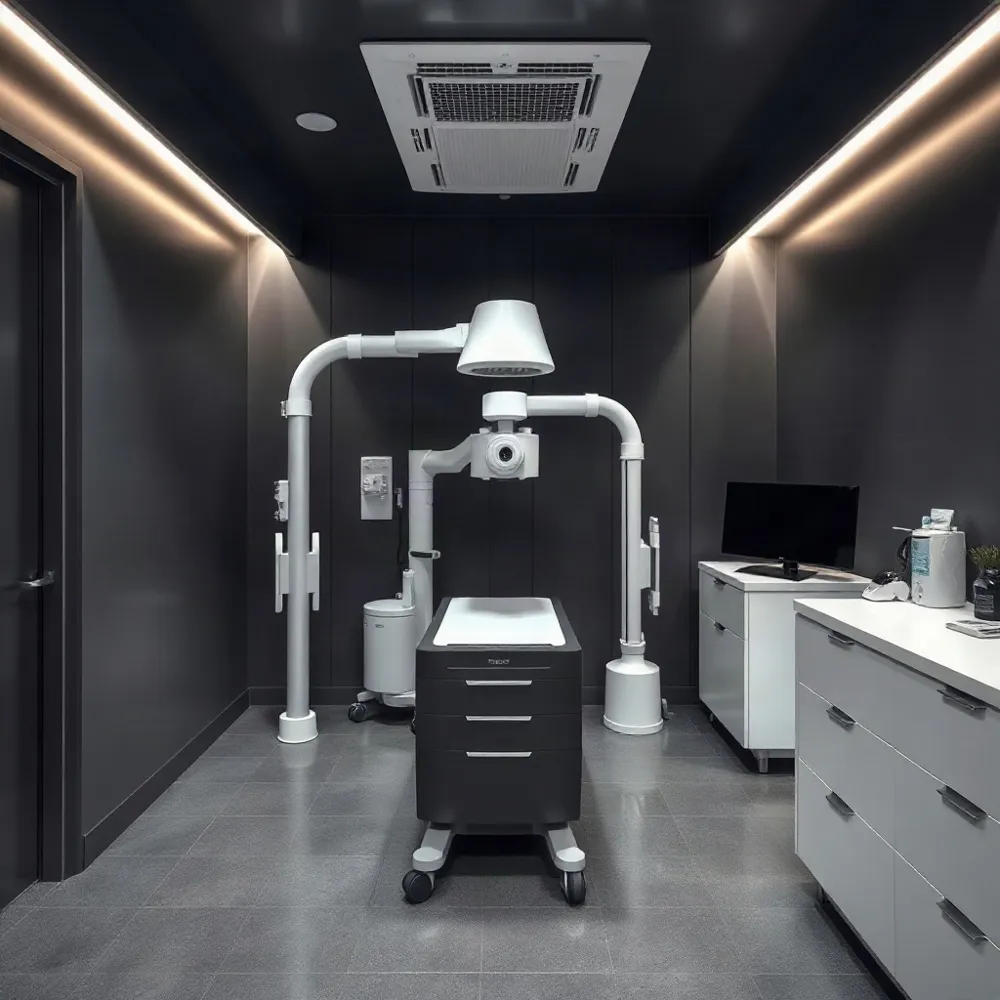
Diagnostic imaging serves as the cornerstone of our practice, allowing us to move beyond surface-level symptoms to identify the root causes of back, neck, and joint pain. By utilizing state-of-the-art X-ray imaging, our team gains the visual clarity needed to develop safe, personalized treatment plans tailored to the needs of local families, athletes, and those recovering from work-related or sports injuries.
This article explores how advanced diagnostic tools, such as digital radiography, support our commitment to measurable health outcomes. By integrating professional imaging into your care, we can offer more targeted interventions, ensuring you receive the highest standard of support on your journey toward long-term wellness.
Why Imaging Matters in Chiropractic
At Osborne Chiropractic Clinic, diagnostic imaging serves as the foundation for your personalized care by providing a clear, objective view of your spinal health. By utilizing state-of-the-art X-ray technology, we can accurately identify the root cause of your pain and visualize your unique musculoskeletal structure. These images allow us to safely rule out serious underlying conditions, such as fractures, advanced arthritis, or scoliosis, while monitoring spinal degeneration or deformities. This precision ensures we can tailor a specific, evidence-based treatment plan designed for your body’s needs rather than relying on guesswork. Ultimately, this high-tech approach empowers us to provide safer, more effective hands-on adjustments that help you return to your daily activities with confidence.
Beyond identifying structural abnormalities, professional imaging is a critical tool for ensuring patient safety and clinical excellence. While some practices rely on generalized approaches, our team uses the objective data from your scans to refine our application of Gonstead and Diversified adjustment methods. This level of detail is vital, as research confirms that diagnostic imaging is essential for accurate postural analysis and effective treatment planning in a clinical setting X-Ray Imaging is Essential for Contemporary Chiropractic and ....
Our commitment to measurable health outcomes means we look for specific markers that traditional physical examinations might miss. By integrating advanced X-ray imaging into our assessment process, we can confirm the clinical necessity of your care and track your structural progress over time. This scientific approach provides you with the peace of mind that your treatment is both evidence-based and specifically targeted to your anatomy. When physical exams are insufficient to explain your symptoms, high-quality digital imaging helps us determine if your discomfort stems from a recent injury, underlying joint wear, or other factors requiring professional attention.
Digital X-Rays: The Gold Standard for Spinal Assessment
 At Osborne Chiropractic Clinic, we prioritize precision to ensure you receive the most effective care for your unique needs. We rely on state-of-the-art X-ray imaging as our primary tool, as it allows us to visualize your spinal alignment, bone structure, and any signs of degeneration with incredible clarity. By moving beyond guesswork, these images help us identify the root cause of your pain so we can tailor our adjustments specifically to you. While X-rays are the gold standard for our spinal assessments, we may also review or refer you for advanced imaging like MRIs, CT scans, or ultrasounds when a more detailed view of soft tissues, discs, or nerves is necessary. Our goal is to use these evidence-based technologies to provide a clear path toward your long-term wellness and recovery.
Modern digital radiography has transformed how we capture and interpret your spinal health. Unlike traditional film-based methods, digital sensors capture high-resolution images instantly. This technology improves patient safety by reducing radiation exposure by 90% compared to conventional systems, while eliminating the need for toxic chemicals and water typically required for film processing.
Digital systems also grant our team the ability to zoom, rotate, and adjust image brightness or contrast on our screens. This advanced capability allows us to reveal subtle vertebral rotations, narrowing of disc spaces, and early signs of degenerative changes that might be missed on standard film. Because these files are stored securely in the cloud, we can easily track your progress over time, share images for collaborative care, or provide you with copies for your own records.
When Are X-Rays Recommended? A Clinically Guided Approach
At Osborne Chiropractic Clinic, we believe the best care begins with a thorough understanding of your unique spinal health. While many musculoskeletal issues are effectively diagnosed through a physical exam and motion analysis, X-rays are a vital tool when we need to rule out structural concerns like fractures, significant misalignments, or underlying health conditions. We don't believe in one-size-fits-all protocols; instead, we recommend imaging when it is clinically necessary to ensure your safety and provide the most accurate treatment plan. If you have recent imaging from another provider, we are happy to review those during your first visit to save you time and unnecessary exposure. Our goal is always to use the best evidence-based tools to guide your care and help you feel your best.
Clinical practice guidelines, including those supported by the Choosing Wisely movement, emphasize that spinal imaging is not a routine screening tool. Instead, X-rays are used selectively to investigate cases involving suspected serious pathology, recent trauma, or to monitor progressive structural deformities such as adolescent idiopathic scoliosis.
For most cases of acute spinal pain, we recommend a period of initial conservative management. According to current medical guidelines, imaging is typically deferred for 4 to 6 weeks unless specific red flags emerge. These clinical warning signs that necessitate further diagnostic investigation include:
- A history of cancer
- Unexplained weight loss
- Persistent night pain or fever
- Progressive neurological deficits, such as lower limb weakness or saddle anesthesia
By following this evidence-based approach, our team at Osborne Chiropractic Clinic ensures that your diagnostic process is safe, efficient, and directly tailored to your health needs. We prioritize your well-being by avoiding unnecessary exposure, ensuring that every tool we use provides clear, actionable data to help you return to your daily activities.
Safety First: Low Radiation, High Confidence
 At Osborne Chiropractic Clinic, we prioritize your safety by using modern, digital X-ray equipment that significantly minimizes radiation exposure while delivering high-quality, clear images. We believe in a personalized approach, which means we only recommend imaging when it is clinically necessary to guide your care and ensure the most effective treatment plan. Every patient is unique, and our decision to use X-rays is based on your specific health history, physical examination, and individual symptoms. By utilizing these tools only when essential, we ensure that the diagnostic benefits of understanding your spinal health far outweigh any minimal exposure. Our goal is to provide you with peace of mind and the high-touch, evidence-based care you deserve as you work toward long-term wellness.
Are chiropractic X-rays safe?
Modern digital X-ray technology represents a significant leap in patient safety, utilizing 70-80% less radiation than traditional film methods Advantages of Digital Radiography for Chiropractors. For most patients, this exposure is equivalent to only 2-3 days of natural background radiation The Role of Digital X-rays in Chiropractic BioPhysics. Furthermore, the radiation dose for a standard spinal radiograph is more than 100 times lower than the established threshold known to cause harmful health effects X-Ray Imaging is Essential for Contemporary Chiropractic and ....
Our team at Osborne Chiropractic Clinic adheres to evidence-based clinical guidelines, meaning we avoid routine or repetitive imaging. Instead, we perform a thorough physical evaluation and reserve imaging only for instances where it is medically indicated to confirm a diagnosis, such as identifying serious pathology or assessing trauma Current evidence for spinal X-ray use in the chiropractic .... This balanced, evidence-based approach ensures you receive the precise insights needed for your recovery while keeping your total radiation exposure at an absolute minimum.
What an X-Ray Can (and Cannot) Reveal About Nerve Pain
 Can a chiropractor see a pinched nerve or other specific conditions on an X-ray? While an X-ray primarily captures a clear view of your bones and joint spaces, it is an essential diagnostic tool for identifying the root causes of nerve pressure. By analyzing your spinal alignment, we can often spot narrowed joint spaces, bone spurs, or structural shifts that are physically encroaching on the pathways where your nerves exit the spine.
While soft tissues like discs and nerves themselves do not appear on standard X-rays, these structural markers provide us with critical information about where nerve compression is likely occurring. Because X-ray technology captures a static snapshot of the spine as defined by the Journal of Hand Therapy, we pair these images with a comprehensive physical examination to ensure our Osborne Chiropractic Clinic team understands the full context of your symptoms.
If we see evidence suggesting a deeper issue involving soft tissues, we may coordinate for advanced imaging like an MRI. Per PMC research, MRI is often preferred when there is clinical suspicion of serious pathology because of its higher sensitivity for non-bony structures. By blending traditional digital X-ray findings with advanced diagnostics where appropriate, we ensure you receive a personalized, evidence-based plan tailored to your specific needs.
Beyond X-Rays: When Advanced Scans Add Clarity
While digital X-rays offer an excellent view of your bone structure, they are not always the complete picture. For deeper insights into soft tissues, such as discs, ligaments, and nerves, MRI (Magnetic Resonance Imaging) is often the preferred diagnostic modality. Because X-rays cannot show soft-tissue damage, we may coordinate an MRI if we suspect a herniated disc, chronic sciatica, or nerve impingement. Similarly, CT scans provide highly detailed, cross-sectional views of your bone structure, while ultrasound allows for real-time visualization of muscles and tendons, offering a dynamic look at your injury.
It is important to remember that these imaging methods are complementary. For example, many advanced scans like an MRI are performed while you are in a supine, or lying down, position. This approach effectively captures soft tissue detail but may miss the impact of gravity on your spinal alignment. In contrast, our standing digital X-ray capabilities at Osborne Chiropractic Clinic reveal precisely how your body handles weight, offering a clearer picture of your functional sagittal balance.
Can a chiropractor interpret advanced scans like an MRI?
Yes, chiropractors are highly trained to evaluate and interpret diagnostic images, including MRIs, to ensure your treatment plan is based on a precise clinical understanding of your condition. While radiologists provide an initial report, it is a foundational competency for your chiropractor to perform an independent clinical review of the actual images to correlate them directly with your physical exam findings. This dual-layered approach is essential because research has shown that clinical correlation by your treating provider can significantly improve diagnostic accuracy and care outcomes. By critically evaluating these scans themselves, your doctor can better identify the root cause of your pain, such as specific disc herniations or nerve impingements, and coordinate effectively with other specialists. At Osborne Chiropractic Clinic, we prioritize this level of diagnostic diligence to ensure you receive a safe, evidence-based, and personalized path toward recovery.
Real-Time Diagnosis: Digital Motion X-Ray (DMX)
While static images provide a snapshot of your anatomy, some injuries only reveal themselves when you move. At Osborne Chiropractic Clinic, we understand that your spine is a dynamic structure, which is why we look beyond traditional imaging to explore how your joints function during activity. For patients who continue to experience pain that standard tests cannot explain, Digital Motion X-ray (DMX), also known as fluoroscopy, offers a window into real-time spinal mechanics.
Unlike a conventional X-ray, which captures a single moment in time, DMX visualizes your spine and joints in motion. This technology is particularly valuable for identifying dynamic instability that remains hidden on static films. By watching how your vertebrae move during bending or twisting, we can pinpoint specific areas where your ligaments may lack integrity, often providing crucial answers following whiplash, sports-related trauma, or chronic joint instability.
This motion analysis is vital for identifying nerve impingements that occur only under gravity or during specific physical movements. By observing these patterns firsthand, our team can develop highly personalized treatment plans tailored to your body's unique way of moving. DMX also serves as an objective tool for monitoring your recovery progress. As you heal, we can track improvements in function, ensuring that your care at Osborne Chiropractic Clinic remains as precise and effective as possible.
Empowering Patients Through Visual Evidence
At Osborne Chiropractic Clinic, we believe that clarity is a vital part of your recovery. When we use digital radiography, we can pull your images up on a high-resolution screen instantly. This allows us to walk you through your specific spinal anatomy in the comfort of our adjusting rooms, highlighting areas of concern like vertebral subluxations or misalignments that might be contributing to your pain.
Seeing your own spine firsthand builds confidence in your path to wellness. By comparing your current images against healthy anatomical models, you gain a clearer picture of your health, which often makes it easier to understand why specific adjustments are recommended. According to research, this visual feedback loop not only fosters trust but also increases patient engagement and compliance with personalized treatment plans.
Our modern digital files are stored securely, allowing us to track your progress over time with measurable accuracy. This electronic storage makes it simple to monitor structural corrections and share your results with other healthcare providers whenever necessary. By moving away from older, physical filing systems, we ensure that your medical history remains portable, safe, and ready to support your long-term health goals.
Looking Ahead: AI and 3D Imaging in Chiropractic
The future of musculoskeletal health is rapidly changing, with new innovations set to refine how we evaluate your spine. Technologies like artificial intelligence are beginning to assist clinicians in pattern recognition, allowing for faster and more consistent analysis of diagnostic images. Meanwhile, 3D imaging and reconstruction techniques promise even greater precision, helping us visualize complex anatomical structures that were previously difficult to assess with traditional tools.
At Osborne Chiropractic Clinic, we prioritize staying at the cutting edge of chiropractic science through continuous professional development. This commitment ensures that we evaluate emerging tools like cloud-based storage and sharing for coordinated care, which can streamline communication between your various healthcare providers. By incorporating these advancements, we aim to enhance your diagnostic accuracy and deliver more personalized recovery strategies.
It is important to note that any new technology we adopt is used judiciously and grounded in evidence-based clinical practice. We believe that while high-tech solutions like digital X-ray imaging play a vital role in patient care, they should always be guided by a thorough physical examination and your specific clinical needs. Our primary goal remains the same: using the best tools available to provide safe, effective, and targeted care that supports your long-term wellness.
Your Path to Precision Care Starts Here
At Osborne Chiropractic Clinic, we understand that effective recovery relies on more than just physical adjustments. By combining state-of-the-art X-ray imaging with a commitment to evidence-based practice, we ensure that your care plan is built on accurate, visual evidence rather than guesswork. This approach allows our team to address the root cause of your pain, whether you are managing chronic discomfort or recovering from a sports injury.
Our practice prioritizes your well-being through clear communication, using modern tools to help you visualize your progress and understand your unique spinal health. We believe that empowering you with these measurable outcomes is essential for achieving long-term wellness. If you are ready to explore how precision diagnostics can support your health, we invite you to schedule a consultation with our Raleigh team today to begin your journey toward lasting relief.